
Keynotes
designing design
Kim Albrecht (Folkwang University of the Arts)

Day: Monday, 31.08.2026
Time: 09:30 am – 10:30 am
Room: LX 1205 (Audimax)
The motto “Transforming Interactions” deserves a moment of reflection. What exactly do we transform, and why? This keynote proposes information design as a way of observing the interfaces, computations, and data structures we inhabit, and of turning that observation into a mode of thinking through designed structures.
The premise is simple and unsettling: we design the world, and the world designs us back. What and how we are is shaped by the systems we embed ourselves in: how we work, how we move through cities, how we communicate, how we find love. Nowhere is this clearer than in our digital lived realities, where interfaces and data structures quietly determine so much of everyday experience. Following the notion of ontological design, designing is never only the making of things; it is the making of what we are.
If interfaces are ontological, then information design can function as a second-order observation: a practice that renders the structuring structures visible. Across a series of projects, I will trace what this looks like in practice. By the end, I will ask what it means to design not only for what our systems make present, but also for what they displace, neglect, or leave unseen.
About Kim Albrecht
Kim Albrecht designs information to investigate socio-technological constructs. He is a professor of information design at the Folkwang University of the Arts in Essen, a principal at metaLAB at Harvard, and a faculty associate at the Berkman Klein Center for Internet & Society at Harvard University. Through investigative practices, Albrecht renders visible the modes and perspectives data constructs onto the world. Positioned between scientific, philosophical, and artistic practice, the resulting diagrams graph how design designs the realities around us.
Is AI Leading to Burnout? The (Side) Effects of the Hype (Interaction / UX Ambiguities)
Julia Pedak (Systemic & Psychological Counselor)
Day: Tuesday, 01.09.2026
Time: 09:30 am – 10:30 am
Room: LX 1205 (Audimax)
AI is supposed to lighten our load. So why do so many people feel increasingly exhausted? Perhaps the biggest side effect of AI isn’t technical in nature, but psychological. After all, the rapid pace of digital transformation also affects our mental well-being.
Using concrete examples from everyday work life, this keynote explores the ambivalent effects of the current AI hype. Supplemented by the latest findings from research and psychology, it examines why technologies that are actually meant to lighten our load often initially create additional stress—ranging from feeling overwhelmed and pressure to adapt, to uncertainty about one’s own professional future, to new forms of interpersonal communication.
This is not about being technophobic, but rather about taking a human perspective on digitalization:
- What do we need to cope healthily with profound changes?
- What role do psychological safety, social relationships, and resilience play in times of constant technological change as well as economic and political crises?
- And how can we design digital work in such a way that not only do systems become more efficient, but people also remain healthy in the long term?
The keynote is intended to serve as a catalyst for collective reflection and discussion on the question of how we want to work, communicate, and live together in the future.
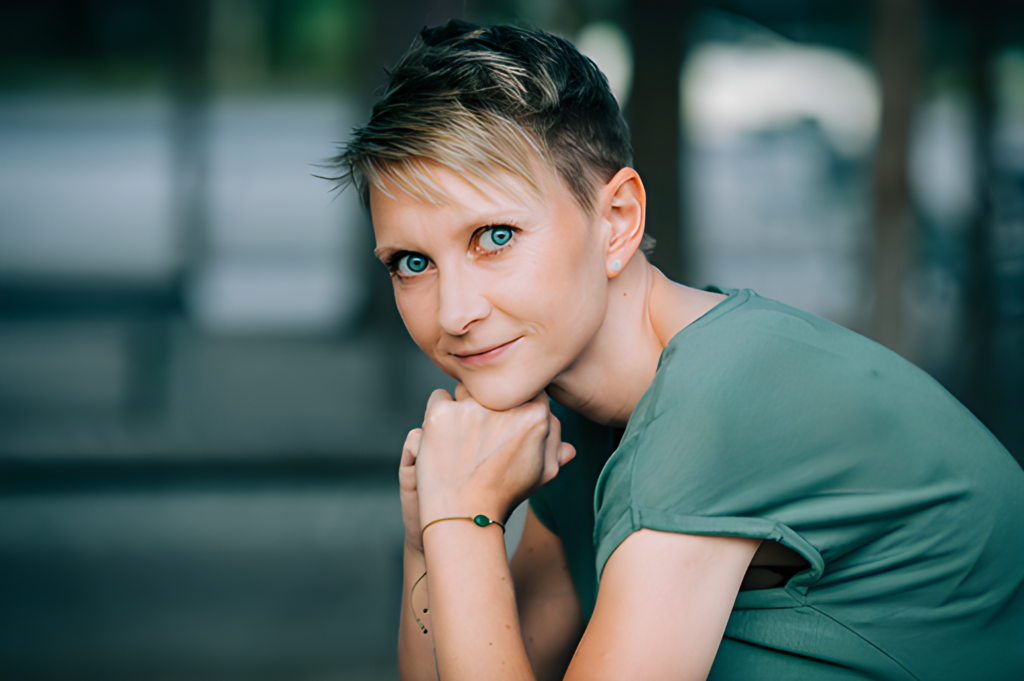
About Julia Pedak
Julia Pedak works as a systemic and psychological counselor in Bonn and online. She supports individuals with issues related to work-life balance, mental health, and career development. She helps teams build resilience, navigate change in a healthy way, and foster respectful communication. As a certified MHFA instructor, she also trains Mental Health First Aid providers.
After studying German language and literature and cultural studies, Julia Pedak worked in corporate communications and marketing at an IT consulting firm and a software manufacturer. In total, she has more than eight years of professional experience in the IT industry. Today, she combines her experience from the digital workplace with psychological counseling. She shares this knowledge through lectures, workshops, and training sessions on topics such as stress, resilience, mental health, communication, and coping with change.